 Chat
Chat
Deviated Nasal Septum Treatment in Gachibowli
Does one side of your nose always feel blocked? A crooked septum can quietly affect your breathing, sleep and sinuses for years. We pinpoint the problem and match the treatment to how much it is bothering you.
- Detailed nasal examination and diagnostic nasal endoscopy
- Medical management for mild symptoms
- Septoplasty for significant structural blockage
Book Your Consultation
Prefer to talk? Call 040-4917 0949
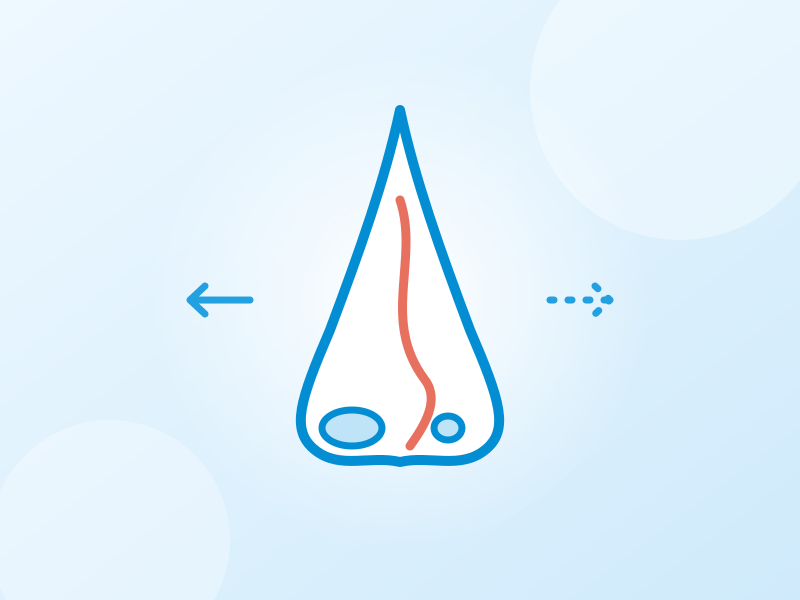
What is a deviated septum?
Inside your nose, a thin partition of cartilage and bone runs down the middle and divides it into two airways. In many people this partition leans to one side. When the bend is large enough to narrow one airway, doctors call it a deviated nasal septum.
Some people are simply born with it; for others it follows a knock to the nose, often one they barely remember. A small bend may cause no trouble at all, while a significant one can lead to a constantly stuffy nose, mouth breathing, snoring, nosebleeds and repeated sinus infections.
Dr. Sai Prateek checks how your septum affects airflow using a thin nasal endoscope. If symptoms are mild, nasal medication may be all you need; if the bend is seriously limiting your breathing, a septoplasty can straighten it.
Symptoms of a deviated septum
If you can't remember the last time both nostrils felt clear, it's time for a check.
How deviated septum treatment works
A clear, unhurried process — you'll know exactly what is happening and why at every step.
Evaluate symptoms
We discuss your breathing, sleep, sinus history and any past nasal injury.
Nasal endoscopy
A thin endoscope gives a clear view of the septum and nasal passages.
Medical care
Mild cases are managed with medication and nasal treatments to reduce swelling.
Septoplasty if needed
When structural blockage significantly affects airflow, septoplasty straightens the septum.
Why treat a deviated septum?
Breathe freely
Better airflow through both nostrils.
Sleep better
Less snoring and mouth breathing at night.
Fewer sinus problems
Improved drainage can reduce recurrent sinusitis.
Fewer nosebleeds
Reduce irritation from turbulent airflow.
More energy
Better breathing supports activity and recovery.
Expert surgical care
Septoplasty performed only when truly needed.
ENT care that listens first
Ear, nose and throat problems rarely exist on their own — they affect your breathing, sleep, voice, energy and focus. At OGHA, Dr. Sai Prateek takes the time to understand your concerns, explains every finding clearly and recommends practical, evidence-based treatment instead of rushing into heavy medication or surgery.
Advanced ENT diagnostics
Diagnostic nasal endoscopy, video laryngoscopy and endoscopic ear examination — so we see the problem, not guess it.
Evidence-based, personalised
Treatment matched to the cause and severity of your condition, from medication and allergy care to surgery when truly needed.
Sleep & airway expertise
A special focus on snoring, sleep apnea and nasal breathing, coordinated with OGHA's sleep and dental teams.
Whole-body support
Allergy, nutrition, weight and lifestyle care under one roof for results that last.
During & after your treatment
On treatment day
- A detailed, unhurried consultation with Dr. Sai Prateek
- Endoscopic examination is quick and done with a local numbing spray where needed
- Findings explained clearly — often shown to you on screen
- You leave with a written, personalised treatment plan
Aftercare & results
- Mild cases often improve with medication and nasal care
- After septoplasty, some nasal stuffiness for a short period is normal
- Saline rinses and follow-up visits support healing
- Breathing typically improves as swelling settles
Timelines, number of sessions and results vary from person to person. Your doctor will confirm what applies to you after an in-person assessment.
Meet Dr. Sai Prateek

Dr. Sai Prateek, MS (ENT)
ENT Consultant & Surgeon · OGHA HealthAn MS in Otorhinolaryngology, Dr. Sai Prateek trained and taught at RVM Institute of Medical Sciences and Research Center, rising from resident to Assistant Professor. Today he leads ENT care at OGHA, where patients value how patiently he listens and how clearly he explains each option before any treatment begins.
- MS (Otorhinolaryngology)
- 5+ years clinical experience
- Former Assistant Professor, RVM IMS&RC
- ENT & sleep care
Deviated nasal septum FAQs
How will I know if my septum is deviated?
Dr. Sai Prateek will ask about your breathing and look inside your nose. A quick nasal endoscopy shows exactly how much the septum is bent and whether anything else, such as swollen turbinates or polyps, is adding to the blockage.
Do I definitely need an operation?
No. Many people live comfortably with a mild bend. Medication can help if the lining is swollen. Septoplasty is advised only when the deviation clearly limits your breathing or causes repeated problems.
What happens in a septoplasty?
The surgeon works through the nostrils to reshape or reposition the bent part of the septum, so there are usually no visible external scars. The aim is a straighter, more open airway.
Can a bent septum make me snore?
It can. A narrowed nasal passage makes you breathe through your mouth at night, which often leads to snoring.
Is a deviated septum linked to sinus infections?
A significant bend can stop the sinuses draining freely, which can make infections more likely to keep coming back.
Related treatments


Breathe easy again
Get your nasal breathing checked by Dr. Sai Prateek at OGHA Health, Gachibowli.
